
Keyboard Tower: ASMR Climb
lehieu.0405tkAction
4.522.00 Reviews
- Version
- 1.0.9
- Installs
- 1.00M
- Age Rating
- Teen
Screenshots
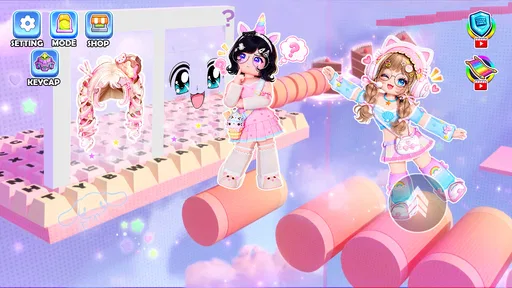

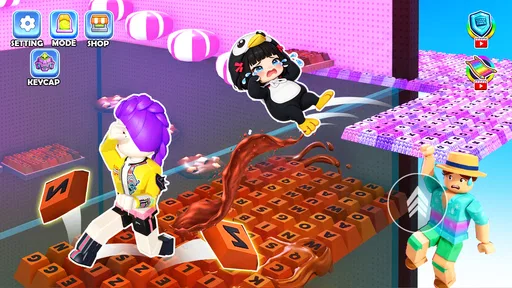
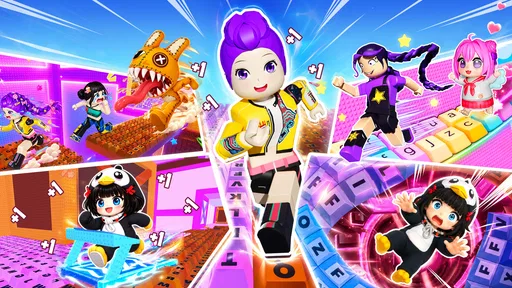
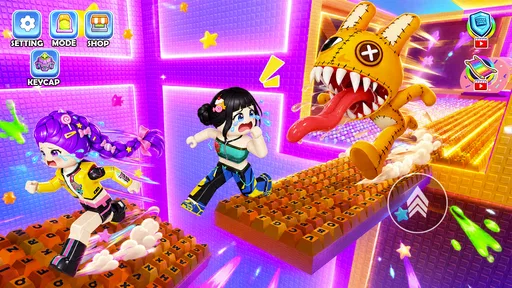
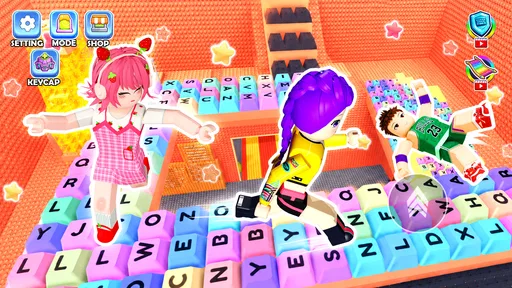
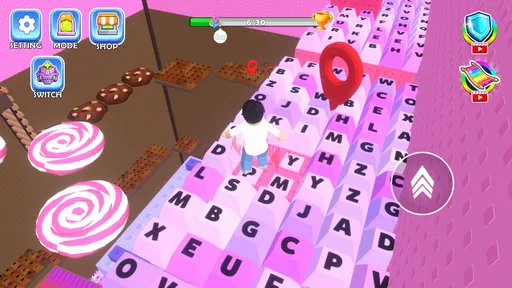
Our Review of Keyboard Tower: ASMR Climb
 Analysis by Appyee
Keyboard Tower: ASMR Climb is an unusual action game built around a simple idea: you arrange a custom keyboard, then use it as the control surface for climbing towers. That combination gives the game a tactile identity from the first session. Instead of presenting itself like a conventional platformer with a familiar virtual joystick, it makes the keyboard setup part of the experience and turns each click into something you notice.
I found the appeal strongest when I treated each climb as a short concentration exercise rather than a traditional action campaign. The game asks for attention, timing, and a willingness to repeat a movement until it feels right. It is free to play, rated Teen, and developed by lehieu.0405tk. With a 4.5 average from around 4.7 thousand ratings and more than a million installs, it has clearly attracted a sizeable audience for such a specific concept.
The current version is 1.0.9 and it runs on Android 10 or newer. Those details matter if you are considering an older phone or tablet, but the more important question is whether the central loop suits you. If you enjoy tactile controls, climbing challenges, and the satisfaction of repeating a precise action, this game has a distinct personality. If you want a broad story, many different modes, or constant spectacle, I would approach it with more caution.
How the first climbs establish the goal
The early goal is easy to understand: set up the keyboard, begin climbing, and keep making progress upward. That clarity is one of the game’s strengths. I never felt lost about what I was supposed to do, and the keyboard theme gives the opening moments a clear identity instead of feeling like another generic action tutorial.
The custom keyboard setup is more than a visual introduction. It frames the way the game wants to be played. Each input feels connected to the idea of pressing a key, and the repeated clicks create a rhythm that is central to the experience. I would not describe the opening as a story-driven onboarding sequence. It is closer to learning a physical routine: arrange the controls, test the response, and start building confidence.
That makes the game especially approachable for players who like compact objectives. A quick session can have a clear purpose even when I do not have time for a long campaign. I can open it, focus on the next section of the tower, and stop after a few attempts without needing to remember a complicated plot or a large inventory.
At the same time, the early simplicity may feel thin to players who expect a lot of variety immediately. The game’s hook is narrow by design. Its interest comes from the interaction between climbing and keyboard-based control, not from a large collection of unrelated activities. I think that is a fair trade, but it means the first impression depends heavily on whether the clicking and climbing feel satisfying to you.
Why the keyboard setup matters
The setup gives the game a more personal feel than a standard action title. I found myself paying attention to the arrangement because it changes how I interpret every input. Rather than mindlessly tapping a large on-screen button, I became more aware of the sequence and timing of my actions.
There is also a useful mental distinction between learning the controls and mastering the climb. At first, I was simply trying to understand what each action did. Once that became familiar, the challenge shifted toward consistency. That transition is important: it gives the opening a small but meaningful goal, even without needing a complicated progression system.
A practical tip is to play the first few attempts slowly instead of immediately chasing speed. The tactile idea works best when I concentrate on clean inputs. Rushing can make the climb feel more chaotic than it needs to be, while a measured pace helps reveal which mistakes come from timing and which come from unfamiliarity with the setup.
Who will enjoy the opening most
I would recommend the early game to people who like experimental mobile controls, ASMR-style interaction, and focused action challenges. It is also a reasonable choice for someone who wants a free game that can be sampled quickly before committing to a longer play session.
Players looking for a conventional platformer may need to adjust their expectations. This is not the kind of game I would choose for a rich narrative or a large cast of characters. Its opening works because it establishes a distinctive sensation, not because it delivers a long cinematic introduction.
Progress signals and the feeling of moving upward
The most convincing progress signal is the climb itself. Moving higher gives each attempt a visible purpose, and the tower structure naturally turns improvement into something I can feel. Even when a session ends before I reach the point I wanted, I can usually identify whether I climbed farther, handled a difficult sequence more cleanly, or made fewer careless inputs.
That kind of progress is different from collecting a large number of rewards. The game’s appeal is tied to performance and repetition, so the meaningful question becomes, “Can I do this section more reliably now?” For me, that is enough to create a modest sense of advancement, especially during the first sessions.
One useful way to approach it is to divide the tower mentally into small checkpoints, even if I am not treating them as formal levels. I focus on the next tricky movement rather than thinking about the entire climb. This reduces frustration and makes improvement easier to notice. It also turns failure into information: a missed input shows me where my rhythm breaks.
The limitation is that performance-based progress can be less satisfying for players who want constant unlocks or a strong collection system. The game’s store identity centers on the keyboard and the tower climb, so I would not approach it expecting the same reward structure as a larger action game with characters, equipment, missions, and extensive customization.
How to tell whether you are improving
I found three practical signals useful. First, I could reach the same height with fewer pauses. Second, I could repeat a difficult sequence without changing my entire approach. Third, I began to recover from a mistake instead of immediately losing the rhythm. Those are small improvements, but they fit the game’s focused design.
This is also where the custom keyboard becomes more than a novelty. Once I stop thinking about the controls as something new, the arrangement becomes a reference point for muscle memory. I can concentrate on the tower rather than rediscovering the interface each time. That is a subtle strength, and it rewards players who give the game enough time to become familiar.
For a short everyday session, I would use it during a break when I want something interactive but not mentally sprawling. I might attempt one section several times, stop after a clean run, and return later. That approach suits the game better than expecting a long, eventful evening filled with new content every few minutes.
What progress does not provide
The game is less suitable if your motivation depends on visible rewards at every step. A tower climb can be satisfying, but it does not automatically replace the excitement of unlocking a new character or collecting equipment. I would choose a more conventional action game if my main goal were to build a large roster, compare statistics, or follow a sequence of story objectives.
That does not make the progression weak; it makes it specialized. The game asks me to value improved control and higher climbs. If that kind of progress feels meaningful to you, the structure can hold attention. If it feels like repeating the same task, the experience may lose its appeal quickly.
Difficulty curve, pacing, and the cost of repetition
The difficulty curve is best understood through the growing demand for precision. The basic idea is immediately readable, but climbing successfully requires more than knowing which input to press. Timing, rhythm, and recovery become increasingly important as I move through the challenge. The result is a game that can feel calm in one attempt and surprisingly demanding in the next.
I appreciated that the action does not need constant visual noise to create pressure. The click-focused design makes small mistakes noticeable. That gives the game a slower, more deliberate pace than many mobile action titles, where rapid effects and frequent rewards can distract from the actual controls.
However, the same pacing can expose a weakness. Repeating a climb is enjoyable only while I feel that each attempt teaches me something. When I make the same mistake without understanding why, the calm atmosphere turns into irritation. My best advice is to change one part of your approach at a time. Altering everything after every failure makes it harder to identify what actually helped.
The game is therefore a better fit for patient players than for people who want instant mastery. I would not call it a relaxing game in the usual sense, even though the clicking can feel soothing. The sound and interaction may be pleasant, but the climb still demands attention. It is relaxing when I am in control; it becomes tense when I am chasing a difficult section.
A realistic session on a busy day
Imagine having ten minutes between tasks. I would start with one familiar attempt rather than jumping straight into the hardest section. After that, I would repeat the area where I usually lose consistency, focusing on a steady sequence instead of speed. If I finally pass it cleanly, I would stop there rather than continuing until frustration replaces the satisfaction.
That routine works because the game’s pacing supports short, focused sessions. It does not require me to prepare a large strategy or remember a complicated set of objectives. The trade-off is that a short session may not produce a dramatic new reward. The payoff is personal improvement: a smoother climb, better timing, or a higher point reached through more controlled play.
When the difficulty becomes a problem
If you dislike repeating the same challenge, the game may feel restrictive. The keyboard concept can make the first attempts memorable, but novelty alone cannot carry every session. The long-term experience depends on whether improving your climbing technique is rewarding enough to justify retries.
I would also skip it if you need a game that can be played almost entirely without concentration. Although the interaction has an ASMR-like quality, it is not simply background entertainment. Looking away at the wrong moment can interrupt the sequence, and casual tapping will not necessarily produce reliable progress.
What keeps the climb interesting over time
The retention pressure comes from the desire to correct a mistake and reach a little higher. That is a modest but legitimate loop. I often wanted one more attempt because I knew the previous failure was close to being solved. The tower gives that effort direction, while the keyboard provides a recognizable physical routine.
What keeps the game from feeling completely generic is the relationship between sound, input, and movement. Every click feels like part of the climb rather than a detached command. That connection gives repeated attempts a stronger identity than tapping through ordinary menus or using a standard virtual control scheme.
Still, the retention model is not universally persuasive. Players who need frequent unlocks, changing objectives, or a broad range of environments may find the central loop too focused. I would compare it with a minimalist arcade challenge rather than a full-scale action adventure. The usual alternative offers more variety; this game offers a more distinctive interaction.
A useful trade-off appears here. A conventional action game may provide more content per session, but its controls can feel familiar from the first minute. Keyboard Tower: ASMR Climb gives up some breadth to make the act of pressing and climbing feel like the main attraction. I prefer this approach when I want a focused experiment, not when I am searching for an all-purpose action game.
How to avoid burning out
I would avoid playing until every attempt feels automatic. Taking a break after a successful improvement helps preserve the satisfying part of the loop. Returning later can also make the controls feel fresh again, especially because the game’s appeal depends on attention to small movements and clicks.
It is also worth deciding what “success” means before starting. Reaching a new height is an obvious target, but completing a familiar sequence with fewer errors can be just as useful. Setting that smaller goal reduces the pressure to force a perfect run and makes the pacing feel more sustainable.
For players who share devices or switch between phones, the practical question is whether the control arrangement remains comfortable each time. A setup that feels natural on one screen may require a short adjustment on another. I would spend a moment confirming the layout before attempting a serious climb, because a small control misunderstanding can look like a gameplay failure.
Who should choose another action game
I would point someone toward a different option if they want a story-led campaign, extensive character development, competitive multiplayer, or a large equipment system. This game’s identity is too concentrated around its climbing interaction to replace those experiences.
I would also suggest another title for players who prefer constant action and rapid rewards. The deliberate pace is part of the charm, but it can feel slow beside a conventional mobile action game. On the other hand, people who are tired of identical virtual controls may find this change refreshing precisely because it asks them to engage with input in a different way.
My progression verdict
Keyboard Tower: ASMR Climb succeeds when judged as a focused action experiment. Its early goal is clear, its progress is tied to climbing skill, and its pacing gives careful players room to improve. The custom keyboard setup is the feature that separates it from ordinary tower or platform challenges, while the click-centered presentation supplies the game’s strongest sensory appeal.
Its biggest limitation is equally clear: the experience depends on enjoying repetition and precision. I would not recommend it as a universal action game, and I would not choose it for a player who needs a constant stream of new systems or rewards. The game’s retention comes from refinement rather than abundance.
The free price makes it easy to try, and the Teen rating gives families an important age reference before installing. The developer, lehieu.0405tk, has built something specific rather than broadly familiar. That specificity is a benefit if the concept catches your attention, but it also means the game will not suit every taste.
My final recommendation is simple: give it a chance if the idea of climbing through a keyboard-based control setup sounds genuinely appealing, not merely unusual. Start slowly, learn the input rhythm, and judge the game after you have experienced the satisfaction of improving a difficult section. The real reward is not a flood of content; it is the moment a previously awkward climb finally becomes consistent.
For me, that is enough to make it worth keeping around for short, focused sessions. It offers a distinctive alternative to standard mobile action games, provided you accept its narrow scope. If you want tactile interaction, measured challenge, and a progress loop built around personal control, Keyboard Tower: ASMR Climb is an easy game to recommend. If you want variety above all else, you will probably be happier elsewhere.
Verdict
Strengths of Keyboard Tower: ASMR Climb
- Simple one-touch controls are easy to learn.
- Short climbing sessions suit quick breaks.
- ASMR-style sounds create a relaxing atmosphere.
- Bright visuals make the gameplay easy to follow.
- Progression gives casual players a reason to continue.
Limitations of Keyboard Tower: ASMR Climb
- Gameplay can become repetitive after extended play.
- Some levels may feel overly dependent on timing.
- The relaxing audio may not appeal to every player.
- Progress can feel slow without repeated attempts.
- Ads may interrupt the experience between sessions.
Similar Picks in This Category
View All
Temple Run 2: Endless Escape
Imangi Studios4.1

PUBG MOBILE
Level Infinite4.3

Free Fire: 9th Anniversary
GARENA INTERNATIONAL I4.4

Talking Tom: Hero Dash Run
Outfit7 Limited4.3

slither.io
Lowtech Studios3.9

Sniper 3D:Gun Shooting Games
Wildlife Studios4.6
Frequently Asked Questions
What is Keyboard Tower: ASMR Climb?
Keyboard Tower: ASMR Climb is a casual climbing game built around a simple but unusual idea: guiding a character upward across a giant keyboard. The experience focuses on short levels, easy-to-understand controls, colorful visuals, and satisfying sound effects. Rather than offering a complex story or deep strategy system, it is designed for quick entertainment, relaxed sessions, and players who enjoy tactile ASMR-style interactions.
How do you play Keyboard Tower: ASMR Climb?
Gameplay is generally straightforward and suitable for casual players. You control the climber’s movement and timing while navigating keyboard-shaped platforms, avoiding mistakes, and trying to reach higher sections of the tower. Progress depends mainly on coordination, patience, and learning the movement pattern of each stage. The controls are easy to pick up, although later sections may require more careful timing and concentration.
Is Keyboard Tower: ASMR Climb suitable for children?
The game’s simple mechanics, bright presentation, and short levels can make it appealing to children and younger players. However, parents should still check the age rating, advertising policy, and any in-app purchase options listed on the relevant app store. Difficulty may also increase as the player advances, so younger children could occasionally need help with timing-based sections or repeated attempts.
Does Keyboard Tower: ASMR Climb require an internet connection?
The core climbing experience may be playable without a constant internet connection, which is convenient for short trips or offline gaming. Nevertheless, some features can depend on connectivity, including advertisements, reward systems, updates, analytics, or promotional content. Before downloading, it is worth checking the current store description and testing the game in airplane mode, since offline availability can change between versions.
Are there ads or in-app purchases in Keyboard Tower: ASMR Climb?
Like many free casual mobile games, Keyboard Tower: ASMR Climb may include advertising, such as videos shown between attempts or optional ads that provide extra rewards. Depending on the version and platform, it may also offer in-app purchases or paid options connected with progression, bonuses, or removing advertisements. Review the official store listing and purchase settings before downloading, especially if children use the device.
Play our best games!


